
Periodontics
Protecting the Gums, Bone, and Foundation That Support the Entire Smile
Periodontal care focuses on the health of the gums, connective tissues, and bone that support the teeth. When these structures become inflamed, infected, or compromised, the stability of the entire mouth is affected. Periodontics restores that foundation and helps preserve long-term oral health.
What Periodontics Is
The Health of the Gums Determines the Health of the Smile
Periodontics is the area of dentistry that focuses on the prevention, diagnosis, and treatment of gum disease and other conditions affecting the supporting structures around the teeth. This includes the gums, periodontal ligament, and the underlying bone that anchors the teeth in place.
Healthy gums are not just an aesthetic detail. They are part of the functional architecture of the mouth. When the gums or supporting bone begin to break down, teeth can become unstable, infected, or vulnerable to long-term loss.
For that reason, periodontal care is one of the most important building blocks in a foundation-first dental philosophy.
Why Gum Health Matters
The Foundation of the Teeth Begins Below the Surface
Patients often think of dentistry in terms of teeth alone, but the gums and supporting bone play an equally critical role. When gum disease is present, inflammation can begin to destroy the tissue and bone that keep the teeth secure. That process may be gradual, but it can have serious consequences if left untreated.
Periodontal treatment helps control infection, reduce inflammation, protect bone support, and create a healthier environment for every other part of the mouth — including restorative work and future cosmetic treatment.
In a comprehensive practice, periodontal health is never treated as an afterthought. It is part of the core foundation that supports everything else.
Signs of Periodontal Disease
Symptoms Patients Should Not Ignore
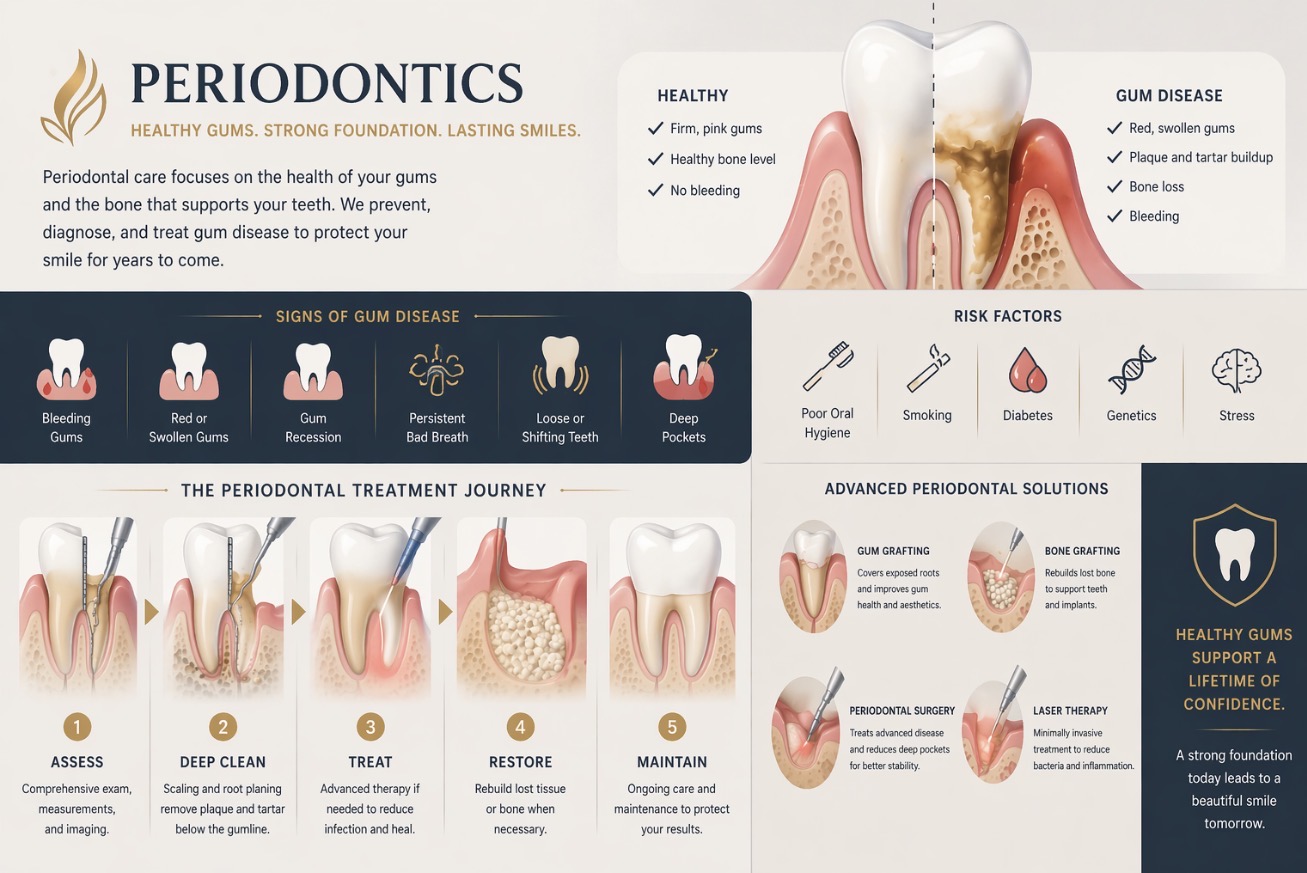
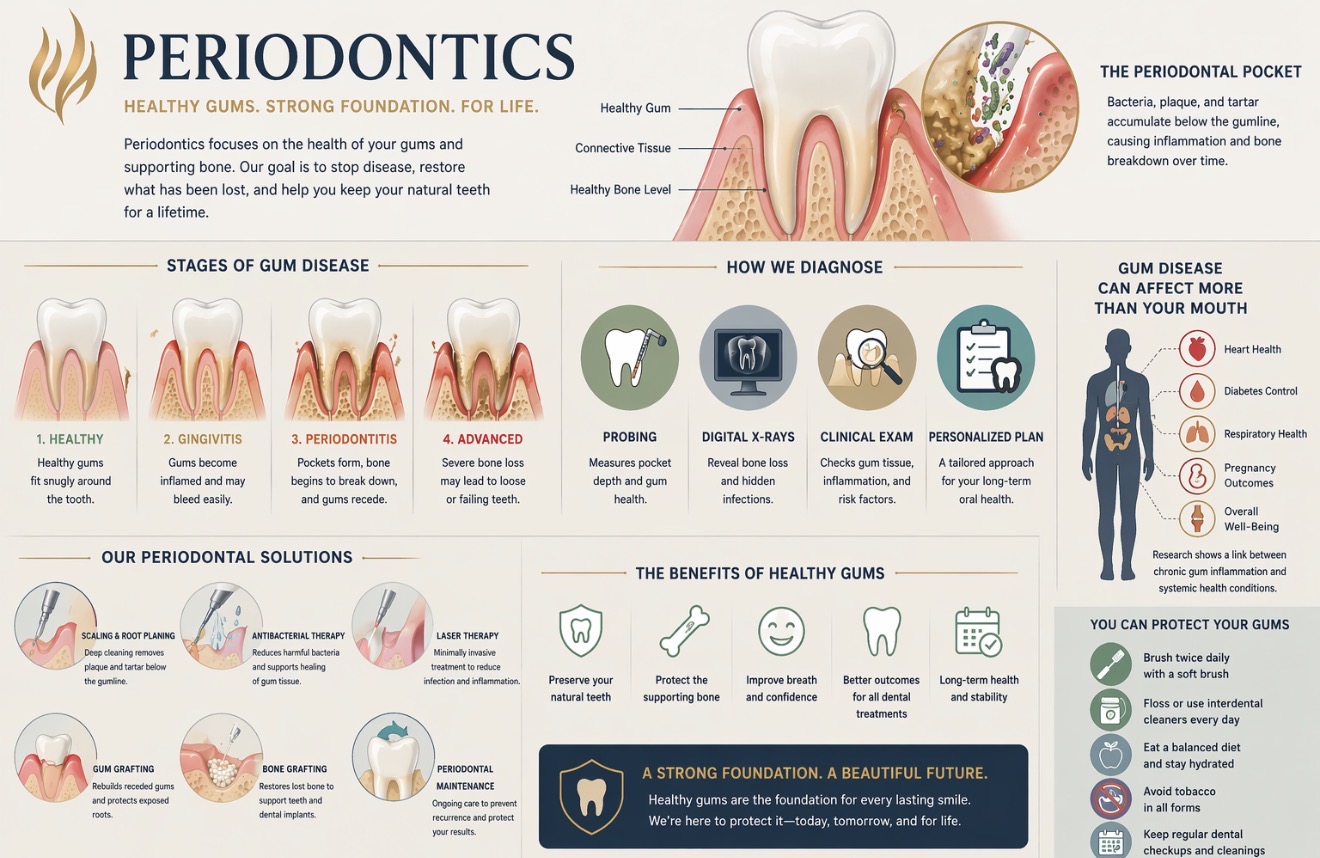
Gum disease can begin subtly. In its early stages, patients may notice bleeding or tenderness. As it progresses, inflammation can deepen, pockets may form, and bone loss can begin around the teeth. In more advanced cases, teeth can loosen and the overall stability of the smile may be affected.
Gum disease does not always produce dramatic pain. That is one reason early diagnosis and maintenance are so important.
Core Periodontal Procedures
Treatments Used to Restore Gum and Bone Health
Periodontal treatment may range from non-surgical therapy to more advanced procedures, depending on the severity of the condition and the degree of tissue or bone involvement.
Scaling and Root Planing
Deep cleaning below the gum line to remove bacterial buildup, smooth root surfaces, and reduce inflammation in the early to moderate stages of gum disease.
Periodontal Maintenance
Ongoing supportive care designed to help patients control disease activity and protect long-term gum stability after treatment.
Gum Disease Therapy
Clinical management of infection, inflammation, and tissue breakdown affecting the periodontal structures surrounding the teeth.
Gum Grafting
Used to address gum recession, protect exposed roots, and restore healthier soft tissue coverage in vulnerable areas.
Bone Grafting
Supports sites that have lost bone because of infection, tooth loss, or extraction, and may be important for long-term restorative planning.
Periodontal Surgical Therapy
In advanced cases, surgical treatment may be needed to access deep areas of infection, reduce pockets, and improve periodontal stability.
The Process of Periodontal Care
How the Foundation Is Evaluated and Rebuilt
1. Diagnose
We examine gum tissue, pocket depth, attachment loss, inflammation, and supporting bone to determine the true condition of the periodontal foundation.
2. Control Infection
Treatment begins by reducing bacterial burden and managing active inflammation before deeper structural problems can worsen.
3. Restore Stability
Where recession, tissue loss, or bone loss are present, treatment may include regenerative or surgical procedures to support long-term health.
4. Maintain
Periodontal health depends on consistent maintenance and follow-up care to keep disease under control and preserve results over time.
Why Periodontics Matters in a Cosmetic and Restorative Practice
Healthy Gums Make Better Restorations and Better Smiles Possible
Periodontal health affects far more than disease control. It also influences how teeth are framed, how restorations function, how long treatment lasts, and how the entire smile appears. Inflamed or unstable gums can compromise both restorative success and cosmetic harmony.
That is why periodontal care belongs at the beginning of a foundation-first treatment philosophy. Before veneers, before whitening, before major restorative planning, the gum and bone support must be stable enough to protect the result.
In that sense, periodontics is not just a specialty service. It is one of the essential disciplines that makes long-term smile success possible.
When Advanced Treatment Is Needed
Recession, Bone Loss, and Structural Support
In more advanced periodontal cases, treatment may go beyond cleaning and maintenance. Gum grafting may be needed to cover exposed roots and protect sensitive areas. Bone grafting may be necessary in sites where infection, extraction, or long-term disease has reduced structural support.
These procedures are especially important when a patient is planning future restorative work, implant placement, or broader rehabilitation. A stronger periodontal foundation creates more predictable outcomes and better long-term support.
The Long-Term Goal
Preserve the Teeth by Preserving Their Support
Periodontal care is ultimately about preservation. It protects the structures that allow teeth to remain healthy, supported, and functional over time. Without that support, even strong teeth and excellent restorative work can be placed at risk.
By identifying gum disease early, treating it precisely, and maintaining results carefully, patients can protect the natural foundation of the smile and reduce the risk of more serious breakdown later.
Begin with a Periodontal Evaluation
Strengthen the Foundation of the Smile
If you have bleeding gums, gum recession, tenderness, signs of infection, or concerns about the health of the tissues supporting your teeth, periodontal evaluation is an important first step.
We will assess the health of your gums and supporting bone, explain the condition clearly, and build a treatment plan that restores stability and protects your long-term oral health.